Radiant Engagement Rings
1 piece · made to order
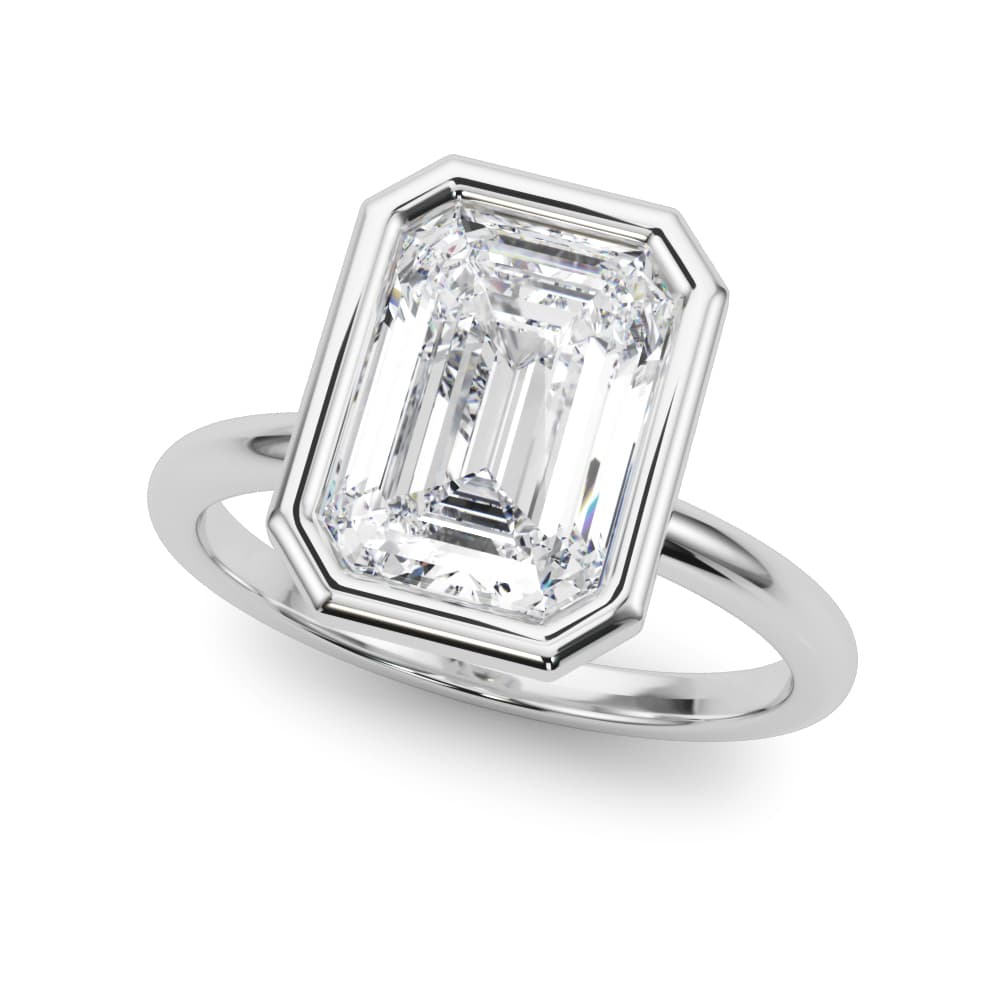
Every setting below is engineered to hold a radiant center diamond — round-level fire in a trimmed-corner outline. Choose the design, pick your certified radiant stone, and we craft the ring to order in 2–3 weeks.
About radiant engagement rings
The radiant cut takes an emerald cut's trimmed-corner outline and fills it with brilliant-style facets — round-level fire in an elongated, corner-safe shape. Radiant engagement rings suit wearers who want serious sparkle with a silhouette that isn't round.
Aurelle radiant settings are built for the shape: solitaires that let the crushed-ice glitter run, halos that widen its presence, three-stone designs with trapezoid sides. Pick your setting, pair it with a certified natural or lab-grown radiant, and we make it to order in two to three weeks.
Choose your ratio first — near-square reads bold, 1.20–1.35 elongates the finger — then let the setting follow.
Radiant Engagement Rings FAQ
What is a radiant cut diamond?+
It's a rectangular or square diamond with cut corners and a brilliant facet pattern — invented in 1977 to combine an emerald cut's shape with a round's sparkle. The result is intense, crushed-ice glitter across the whole stone.
Radiant vs. cushion cut — what's the difference?+
Both sparkle in a crushed-ice way, but the radiant has straight sides and clipped corners while the cushion has curved, pillowy edges. Radiant reads sharper and more modern; cushion reads softer and more vintage.
Are radiant cuts good at hiding inclusions?+
Exceptionally good — the dense facet pattern scatters light so effectively that SI-clarity radiants often look flawless to the eye. That makes radiant one of the best-value shapes: you can buy lower clarity with confidence.
Do radiant cut diamonds look bigger?+
Elongated radiants carry their weight across a longer outline, so a well-proportioned stone can face up larger than a round of the same carat. The corner-to-corner sparkle amplifies the effect.
Are radiant cuts more affordable than rounds?+
Usually — expect to pay meaningfully less per carat than a round at comparable grades, because the cut retains more of the rough. Going lab-grown stretches the savings further; both come certified by GIA, IGI, or GCAL.
What ratio is best for a radiant engagement ring?+
Near-square (1.00–1.10) looks bold and modern; 1.20–1.35 is the classic elongated look that flatters the finger. Neither is wrong — view both on hand if you can.